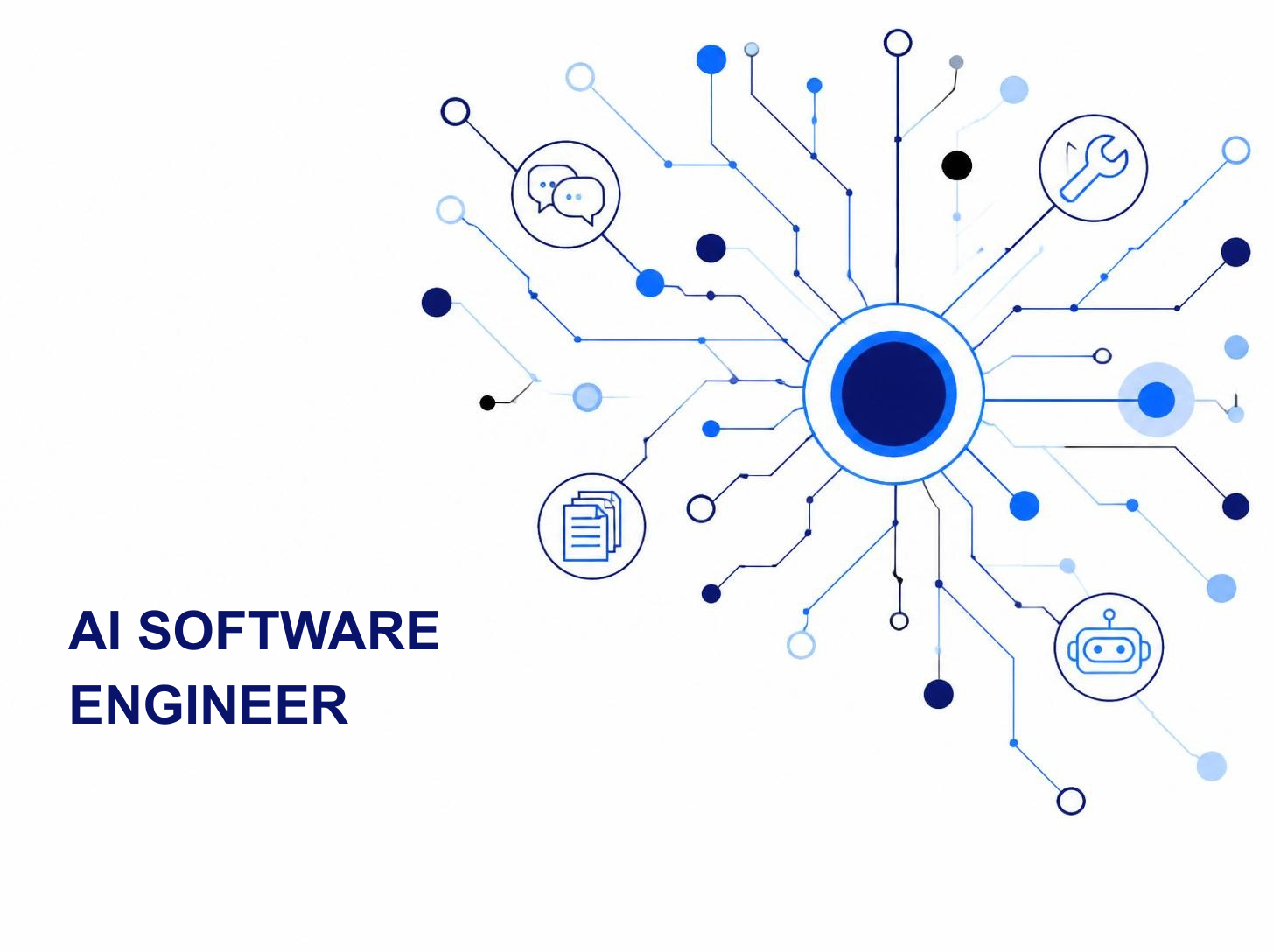
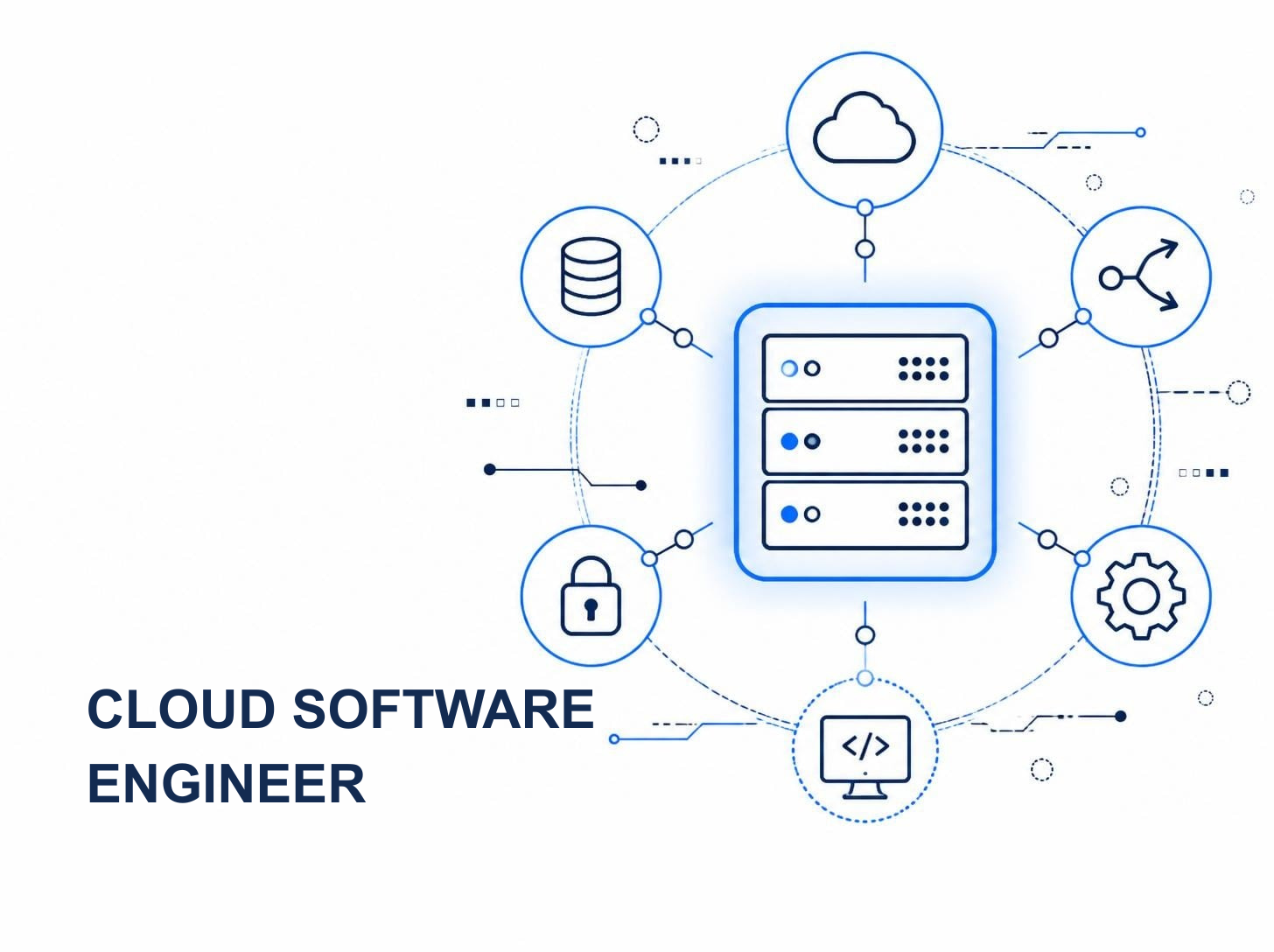
Udaan Learning is a modern skill-building platform built to train the next generation of AI software engineers. The program takes learners from zero coding background to building and deploying real, production-grade applications, focused squarely on the skills the industry is actually hiring for.
Rather than abstract theory, the curriculum is designed around practical, job-ready outcomes. Through a comprehensive, progressive curriculum, learners move from programming foundations to full-stack development, generative AI, and cloud-native engineering — equipping students and early-career developers with the expertise employers demand.
Udaan Learning delivers an immersive training experience through live lectures, online courses, real-time demonstrations, interactive labs, and self-paced exercises — so every learner graduates with genuine, demonstrable skills and a portfolio to prove it.
Start from zero and build the core programming foundation every AI software engineer needs. This module takes you from setting up your development environment to writing real programs in both Python and JavaScript — the two languages you'll use throughout the program. You'll learn to think computationally, work with data, collaborate using Git and GitHub, and understand how the web and APIs actually work. No prior coding experience is required; every concept is taught from the ground up with hands-on labs.
What you'll learn:
Developer setup and computational thinking: installing Python 3.12+ and Node.js 22, VS Code, the terminal, problem decomposition and pseudocode
Python core: variables, data types, strings and f-strings, conditionals, loops, lists, dictionaries and debugging
Turn your JavaScript foundation into modern, full-stack web applications. This module covers professional front-end and full-stack development with React and Next.js 16 — the same stack used to ship production apps today. You'll build responsive interfaces, manage application state, work with server components and databases, style polished UIs, and deploy your work live to the web. By the end you'll be able to build and ship a complete full-stack application.
What you'll learn:
Web UI foundations: semantic HTML5, the CSS box model, Flexbox, Grid, responsive design and accessibility
React core: JSX, function components, props, state with useState, events and controlled forms
React hooks and state management: useEffect, useContext, useReducer, custom hooks, Zustand and TanStack Query
Next.js 16 with the App Router: file-based routing, layouts, navigation and the metadata API
Server Components, Server Actions, caching, streaming and Suspense
Full-stack Next.js: API routes, PostgreSQL with Prisma/Drizzle ORM, CRUD and authentication with Auth.js
Styling with Tailwind CSS and the shadcn/ui component library, dark mode and theming
Deployment on Vercel: environments, Core Web Vitals, performance, SEO and analytics
Learn to build real applications powered by large language models. This module demystifies how LLMs work and teaches prompt engineering as a practical, repeatable skill. You'll work with both paid APIs (OpenAI, Anthropic, Gemini) and free/local models, build AI-powered apps with the Vercel AI SDK, and learn to secure and evaluate what you ship. The module closes with your first capstone prototype — a working LLM-powered application.
What you'll learn:
How LLMs work: tokens, context windows, temperature/top-p, model families (GPT-5.x, Claude 4.x, Gemini 3.x, Llama 4) and hallucination
Prompt engineering core: zero- and few-shot, role/persona, system prompts, delimiters and Chain-of-Thought
Advanced prompting: self-consistency, ReAct, prompt chaining, JSON mode with Pydantic, tool calling and multimodal
Building with LLM APIs: OpenAI, Anthropic and Gemini SDKs, streaming, cost management, plus local models with Ollama, Hugging Face and Groq
Building AI apps with the Vercel AI SDK: streaming chatbots, conversation memory and generative UI
Prompt security, evaluation and responsible AI: prompt injection, guardrails, PII, bias and quality evaluation
Capstone project: an LLM prototype with prompted UX, system prompts and structured outputs
Give your AI applications access to real, up-to-date knowledge. This module covers Retrieval-Augmented Generation (RAG) — the technique behind "chat with your documents" and knowledge-grounded assistants. You'll learn how embeddings and vector databases power semantic search, then build a complete retrieval pipeline and tune it for quality. The module ends with a hands-on project connecting your capstone to a real knowledge base.
What you'll learn:
Embeddings and semantic search: embedding models (text-embedding-3, Voyage, Cohere, BGE), cosine similarity, semantic vs keyword search
Vector databases: HNSW indexing, quantization, metadata filtering; Chroma and pgvector (local), Pinecone and Qdrant (managed)
RAG fundamentals: architecture, document loading, chunking strategies, indexing, retrieval and augmentation with LangChain/LlamaIndex
Building a "chat with your docs" pipeline end to end
Capstone project: build a document/data pipeline, create embeddings and vector indexes, and tune chunking, metadata filters and retrieval quality
Module 1 : Programming Foundations: Python & JavaScript
Course start dateSaturday, 22 August 2026
Start from zero and build the core programming foundation every AI software engineer needs. This module takes you from setting up your development environment to writing real programs in both Python and JavaScript — the two languages you'll use throughout the program. You'll learn to think computationally, work with data, collaborate using Git and GitHub, and understand how the web and APIs actually work. No prior coding experience is required; every concept is taught from the ground up with hands-on labs.
What you'll learn:
Developer setup and computational thinking: installing Python 3.12+ and Node.js 22, VS Code, the terminal, problem decomposition and pseudocode
Python core: variables, data types, strings and f-strings, conditionals, loops, lists, dictionaries and debugging
Both programs are progressive, building-block curricula, but they start from different places. AI Software Engineer assumes zero prior coding background — full Python and JavaScript foundations are included before anything AI-specific begins. Cloud Software Developer is built for developers already comfortable with a programming language, and goes deep on one platform: Amazon EC2 as the central compute layer, with the rest of AWS built around it.
AI Software Engineer: 9 phases, 53 modules, theory + hands-on labs at roughly a 1:2 ratio, ending in a deployed full-stack agentic AI application.
Cloud Software Developer: 9 sections, 38 modules, 120 hours (29 hrs theory + 91 hrs practical), every section ends with a hands-on project, and the whole course builds toward one capstone deployed on EC2 behind a load balancer with Auto Scaling — mapped directly to the AWS Certified Developer (DVA-C02) exam domains.
Both end the same way: a real, deployed system in your portfolio — not just a certificate.
It depends on the track. AI Software Engineer assumes zero prior experience — full Python and JavaScript foundations are included before anything AI-specific begins. Cloud Software Developer is built for developers already comfortable writing code in Python or JavaScript, since it moves straight into AWS and Amazon EC2.
The AI Software Engineer program is a full progressive curriculum — 9 phases, 53 modules. The Cloud Software Developer course is a focused 120-hour program: 29 hours of theory and 91 hours of hands-on practice across 9 sections, each ending in its own project.
AI Software Engineer: a deployed, full-stack agentic AI application using RAG, tools and MCP.
Cloud Software Developer: a real application deployed on Amazon EC2 behind a load balancer with Auto Scaling, a CI/CD pipeline and monitoring in place.
Both tracks end with something real in your portfolio, not just a certificate.
Tools & Frameworks
The exact stack used across the industry in 2026, across both tracks — you'll get hands-on with all of it, not just slides about it.
AI Software Engineer
GPT-5.x, Claude 4.x, Gemini 3.x, LangGraph 1.0, MCP — nine phases from your first line of Python to a deployed, full-stack agentic AI application.